
Swimming Pool Leak Detection in Apopka, FL
Losing more than 1/4 inch of water daily? We diagnose structural cracks, return line ruptures, leaking skimmer throats, and light conduit leaks across residential and commercial pools throughout Orange County.
Quick Diagnostic Summary
- Method: 100% Non-destructive electro-acoustic & thermal testing
- Turnaround: Same-day emergency dispatch across Apopka
- Accuracy: Pinpoint isolation to avoid unnecessary demolition
- Licensing: Conducted by Florida Construction Industry Licensing Board (CILB / DBPR) contractors
Understanding Swimming Pool Leak Detection for Apopka Properties
When homeowners and commercial property managers face unexplained moisture, our referral network connects callers with high-precision leak detection in Apopka, FL. Swimming pool leak detection combines static bucket evaporation tests, dye testing around fittings, and pneumatic pressure testing of underground return, suction, and main drain plumbing lines to pinpoint water loss in gunite, fiberglass, and vinyl pools.
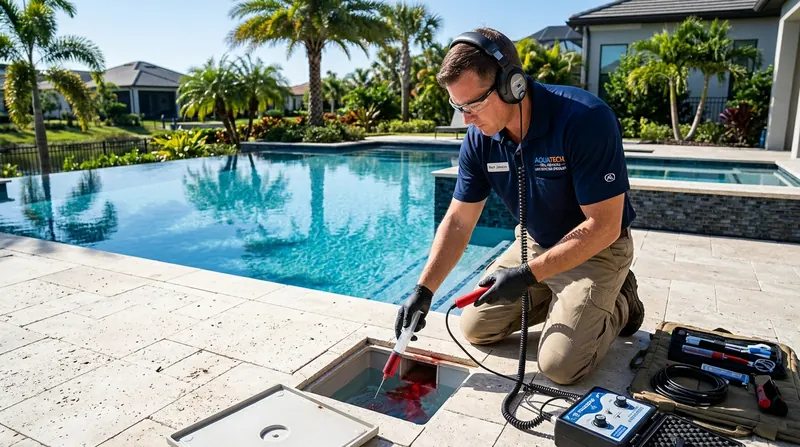
Concealed water leaks present significant risks in Central Florida. Because our local subsoil consists largely of sandy fill over limestone, subterranean water migration can quickly erode supportive ground. Early, accurate detection prevents severe structural subsidence and extensive mold remediation.
Common Signs You Need Pool Leak Testing
If you observe any of the following symptoms in your home, commercial facility, or grounds, prompt testing is recommended:
- Warning Sign: Water level dropping more than 1/4 inch in 24 hours (exceeding normal Central Florida evaporation)
- Warning Sign: Soft, soggy grass or pooling water in the turf surrounding the pool deck or pump pad
- Warning Sign: Automatic chlorinator or salt cell struggling due to constant freshwater top-offs
- Warning Sign: Air bubbles constantly blowing through pool return jets, indicating suction side line leaks
- Warning Sign: Cracks appearing in the pool deck pavers or tile line pulling away from pool beam
Our Systematic Pool Leak Testing Process
Rather than guessing where a pipe is ruptured, certified diagnostic technicians follow a rigorous multi-stage testing methodology:
- Bucket Evaporation Benchmark: Validating true water loss against ambient Apopka humidity and solar evaporation.
- Hydrophone & Sonar Listening: Submersible electronic listening devices detect water pulling into structural fissures or underground pipe splits.
- Precision Dye Testing: Injecting concentrated fluorometric dyes around skimmer faceplates, return fittings, and underwater light niches.
- Pneumatic Line Pressure Isolation: Plugging lines and introducing low-pressure inert gas to isolate underground suction, cleaner, and return lines.
By validating test results across multiple non-destructive instruments, the technician marks the precise breach point on the floor, yard, or pool deck. This surgical accuracy allows plumbers to perform localized repairs without broad destructive trenching.
Local Apopka Environmental & Structural Factors
With Central Florida's intense summer sunshine and subtropical rain cycles, evaporation can be deceiving. However, ground settling in Apopka's sandy soil frequently causes underground PVC plumbing joints between the skimmer and pump equipment to shear or separate.
In neighborhoods like Rock Springs Ridge and Errol Estate, shifting sands and tree root pressure frequently accelerate plumbing stress. For comprehensive property assessments, our network also provides related diagnostics such as slab leak detection, thermal imaging water tracking, and underground water line locating.
When to Call a Professional Diagnostic Specialist
Attempting to locate concealed leaks with guesswork or delayed action almost always multiplies property damage. If your water meter is spinning continuously, your water bill has unexpectedly doubled, or you notice musty odors in your living spaces, you should contact our team for trusted Apopka emergency leak detection. Technicians arrive fully equipped to isolate the issue immediately.
Frequently Asked Questions Regarding Pool Leak Testing
Perform the simple 'Bucket Test': Fill a 5-gallon bucket with pool water and place it on your pool step. Mark the water level on the inside of the bucket and the pool water level on the outside. After 24 hours of normal pump operation, compare both marks. If the pool water level has dropped significantly more than the bucket level, your pool has an active leak.
Yes. A leaking pool plumbing line can release hundreds of gallons of water per day into the porous limestone sub-base common in Apopka and Orange County. Over time, this concentrated water saturation can undermine concrete pool footings, wash away support sand beneath pavers, and accelerate localized subsidence.
In over 95% of cases, no. Certified leak specialists utilize specialized diving gear, underwater acoustic hydrophones, and dye testing while the pool is completely full. Keeping the pool full maintains essential hydrostatic pressure against the shell.